The agreement between Tata Steel and the Dutch government on Green Steel is months behind schedule, FNV reported this week. There is still no agreement on environmental standards and the processing of steel slag.
Extending the life of existing systems
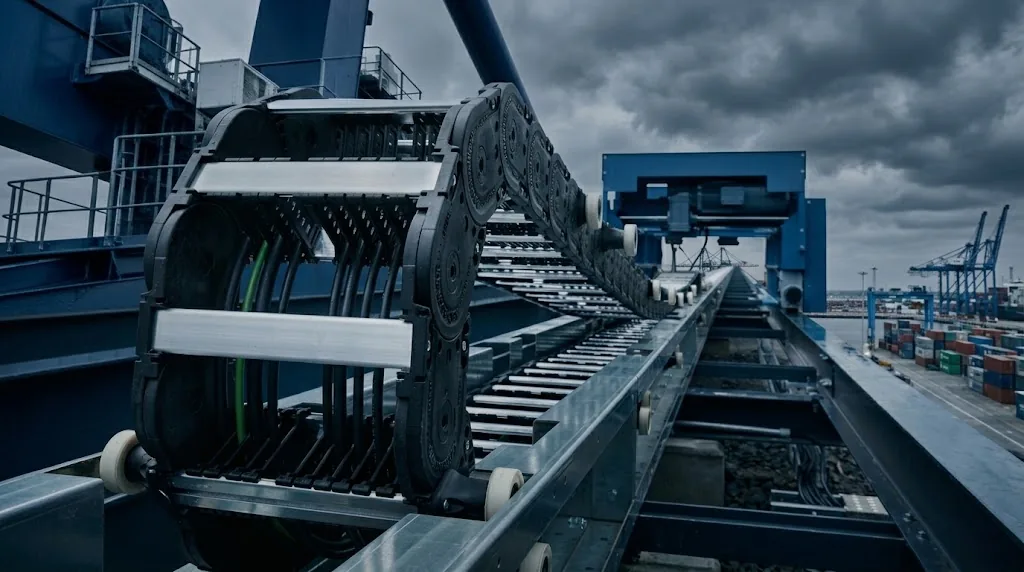
Whatever the outcome, the existing installations must keep running in the meantime. In the steel and process industry, cable carriers operate under harsh conditions: heat, dust, long strokes and continuous operation. When major investments are postponed, existing systems often need to last longer.
What harsh conditions do to a cable carrier
- Heat: plastic loses strength at high temperatures. Close to furnaces or casting beds, steel carriers or additional heat protection are often required.
- Dust and slag: dirt between links and in the guide channel accelerates wear of hinges and sliding surfaces.
- Long stroke lengths: the carrier glides over itself. A good channel and glide shoes then determine how long it lasts.
- Continuous operation: there is little time for maintenance, so repairs must be well prepared in advance.
Planned maintenance instead of reacting
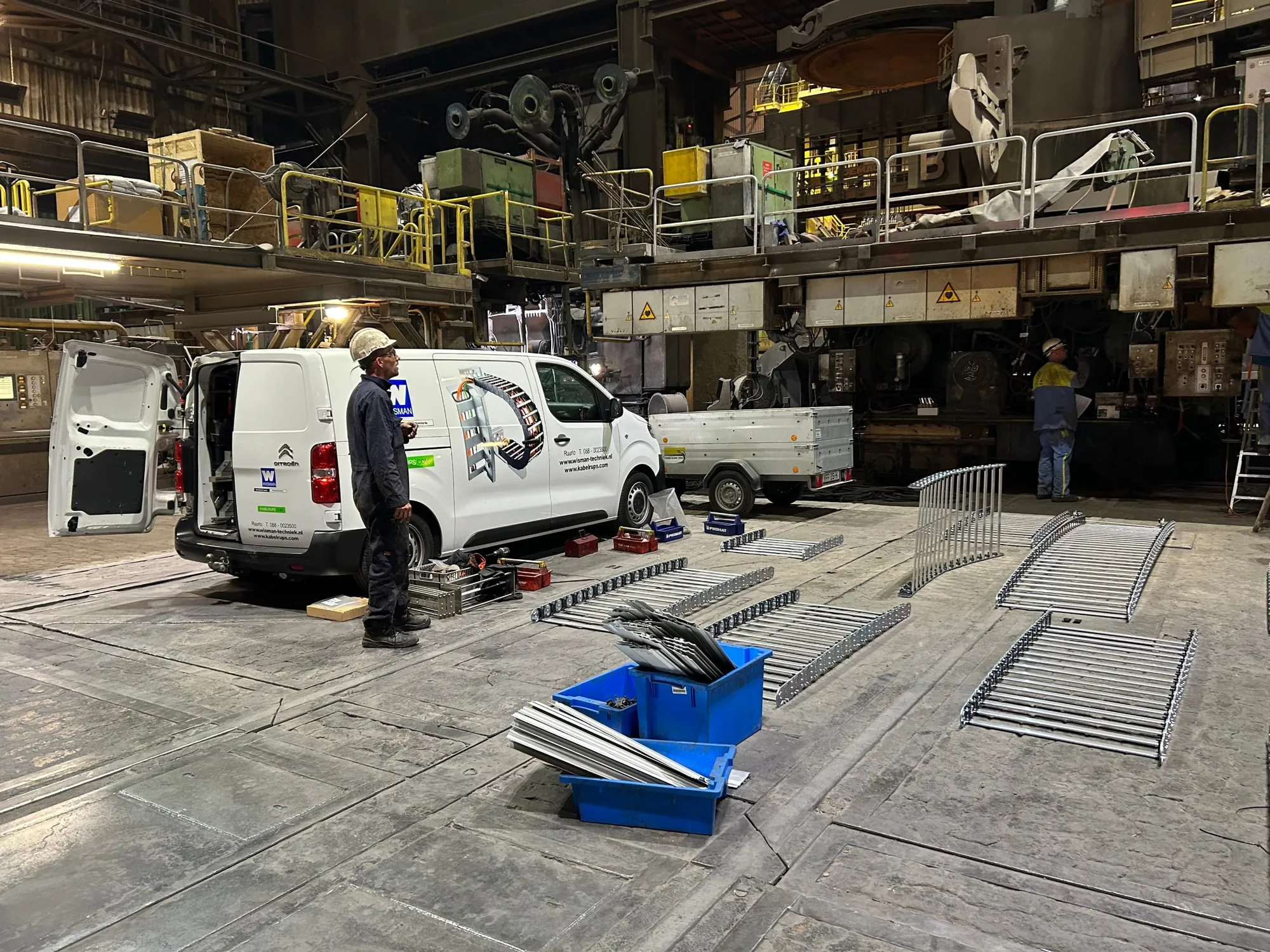
This calls for planned maintenance instead of reacting to breakdowns. Wisman Techniek inspects, refurbishes and replaces cable carriers in heavy industry. In doing so, we take a pragmatic view of what can still last and what really needs to be replaced.
Our sequence is always the same:
- (01)Inspect: record the condition of each carrier, with photos.
- (02)Assess: refurbish where possible, replace where necessary.
- (03)Prepare: have parts and cables ready in Ruurlo.
- (04)Execute: during the shutdown you had already planned.
A strong steel industry is important for the entire Dutch manufacturing chain. We therefore hope for a fast and workable agreement.