According to a new FME survey of 107 technology companies, 22 per cent have postponed investments, and another one in ten expect to have to do so. The postponement affects areas including digitalisation and automation, sustainability, production, and research and development.
That is understandable. According to the same survey, 60 per cent of companies face higher energy costs, and 60 per cent also report supply chain problems, mainly higher transport costs and purchase prices. When energy, transport and purchasing all become more expensive, it makes sense that a new line or an extra robot stays on the shelf for a while.
What postponement means for your machinery
Postponing does have a downside. The machines you have now have to last longer than planned. An installation that was due to be replaced next year may keep running for a few more years. And that while unplanned downtime is especially costly right now: every hour a line stands still costs production, and rush parts and rush installation are usually more expensive than work you can plan.
So if you postpone investments, it is better to shift your attention to the machinery you already have. Not by tackling everything at once, but by looking at which parts wear and what is needed to keep them running reliably.
Cable carriers wear gradually
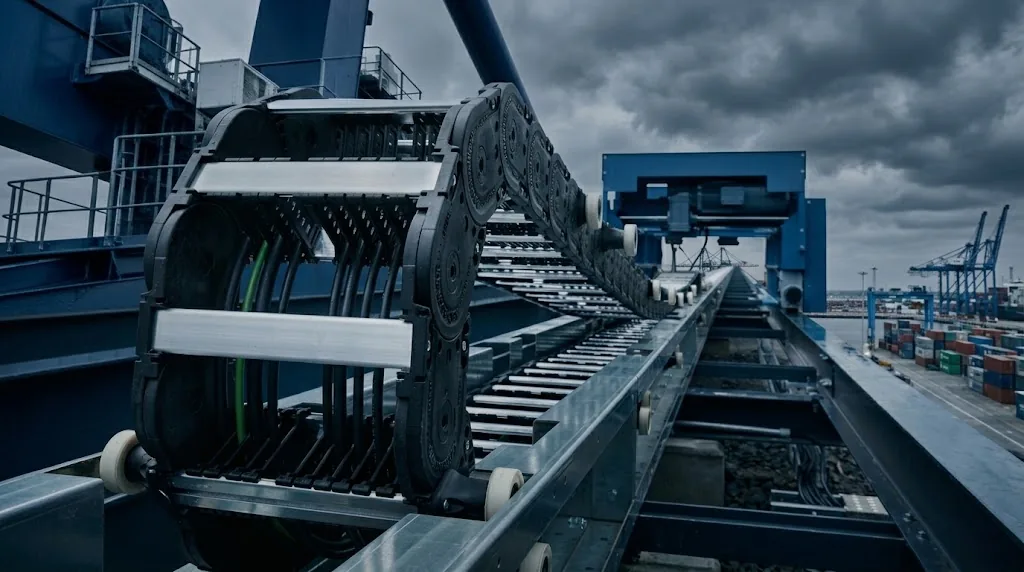
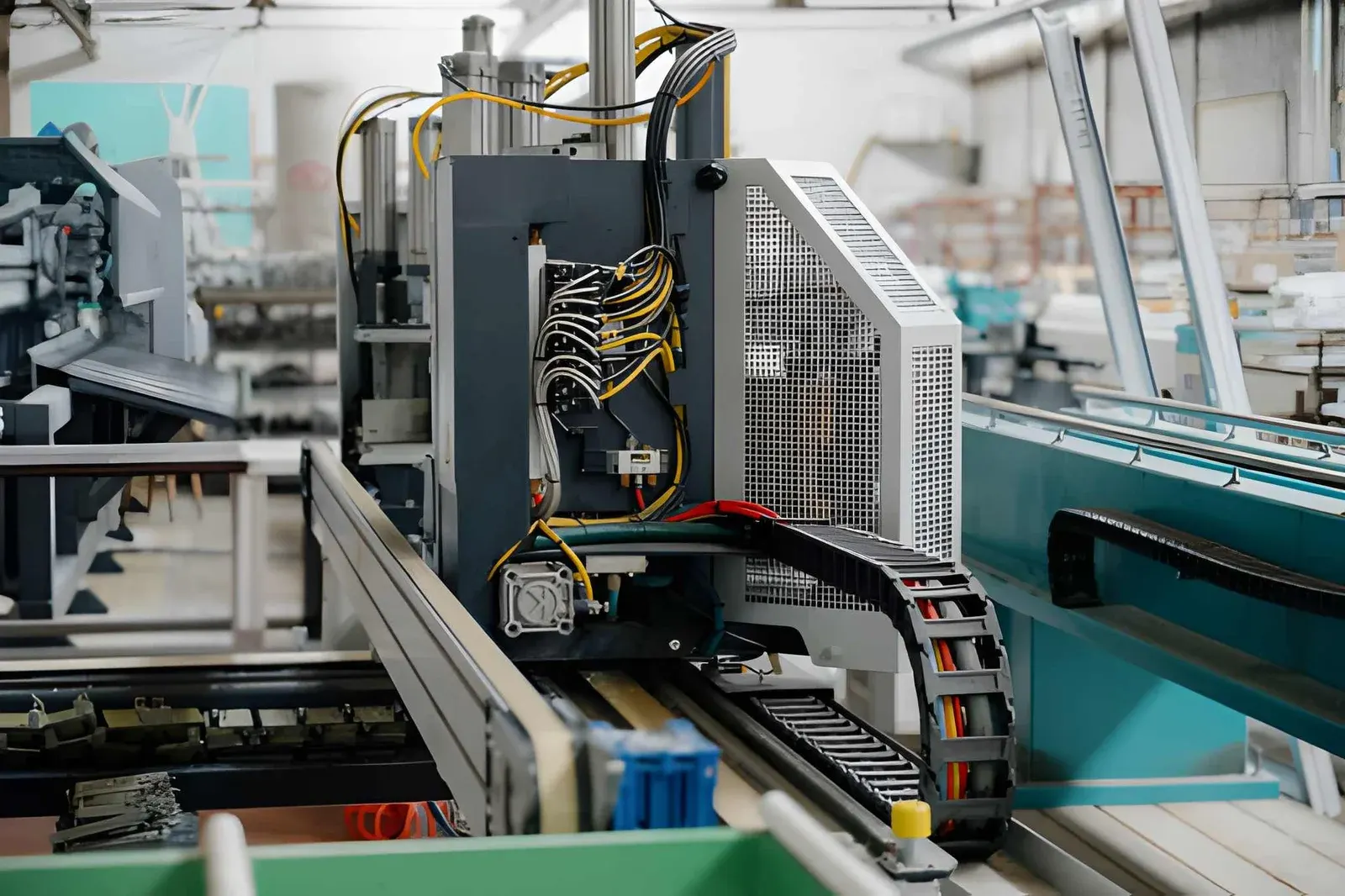
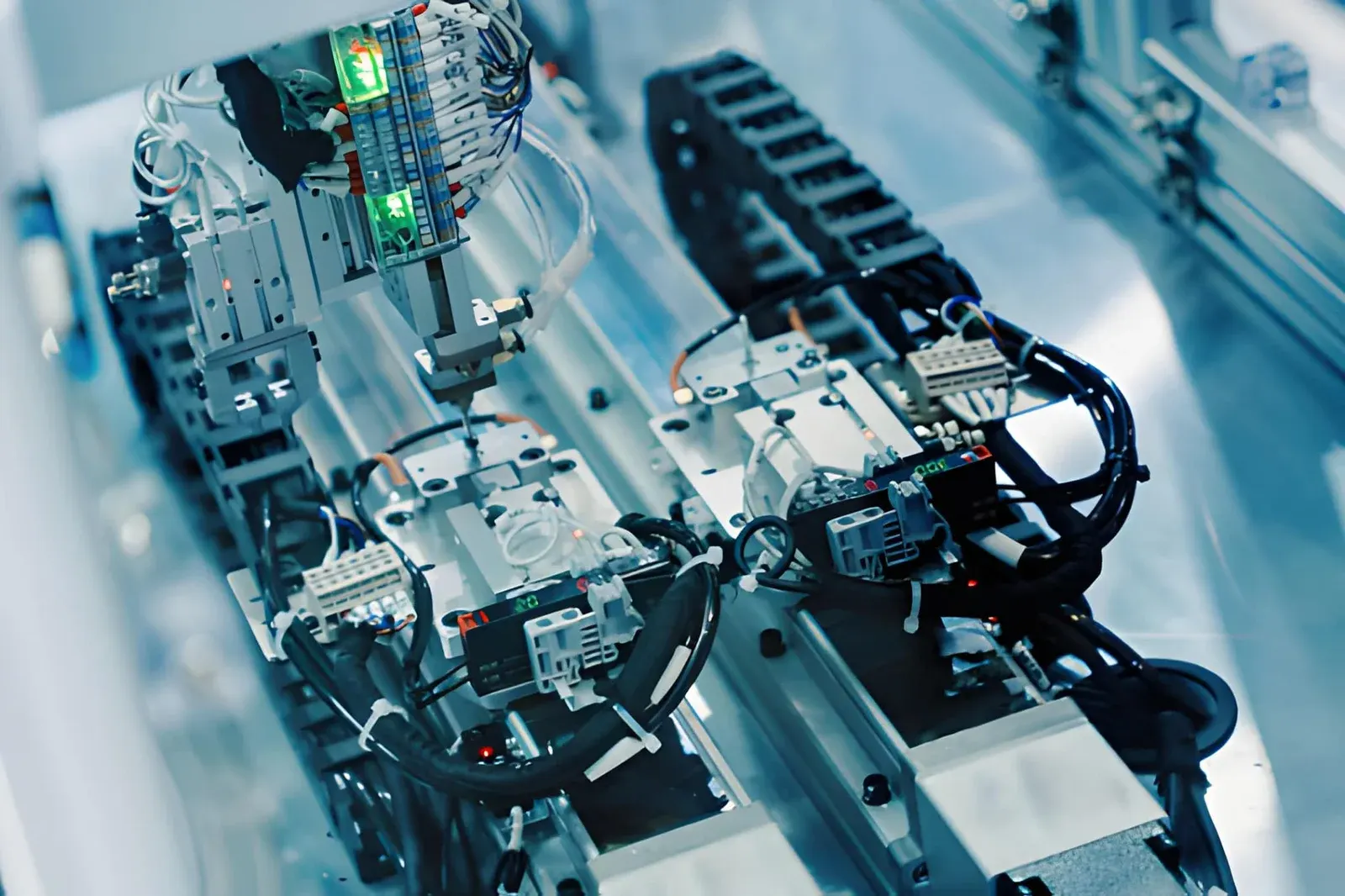
A good example is cable carriers and the cables and hoses that run inside them. They move with every stroke of the machine, often many times a day, and therefore wear gradually. That is not a problem, as long as you spot it in time. A cable carrier usually announces wear well in advance.
Signs to look out for:
- The carrier makes more noise than before, such as rattling, clicking or squeaking with every movement.
- Links, pins or crossbars are worn, cracked or broken.
- Cables twist into a spiral, creep out of the carrier or have a damaged jacket.
- The carrier runs out of the guide channel or rubs against the machine.
- The upper run sags further than you are used to.
You can read more about recognising wear in our article Recognising cable carrier wear. Want to check it quickly yourself? Take the carrier check: a few short questions about what you see and hear, with a status as the outcome.
Refurbishing instead of replacing
A worn cable carrier is often replaced in its entirety, while the problem sometimes lies in some of the links, the guidance or the cables. A targeted refurbishment is often enough to keep an installation running reliably for years, at a fraction of the cost of replacement.
What a refurbishment involves depends on what we find:
- Links and crossbars: replacing worn or broken parts instead of the whole carrier.
- Cables and hoses: replacing damaged lines with cables suitable for continuous movement in a cable carrier.
- Layout: re-arranging cables with separators so they don't rub against or twist over each other.
- Guidance and mounting: checking the channel and end brackets so the carrier runs straight and smoothly again.
It is important to look at the cause as well. An incorrect bending radius, an overfilled carrier or misaligned mounting will simply come back after a refurbishment if you do nothing about it. In the article Repair or replace a cable carrier? you can read how to weigh this up.
What Wisman Techniek can do for you
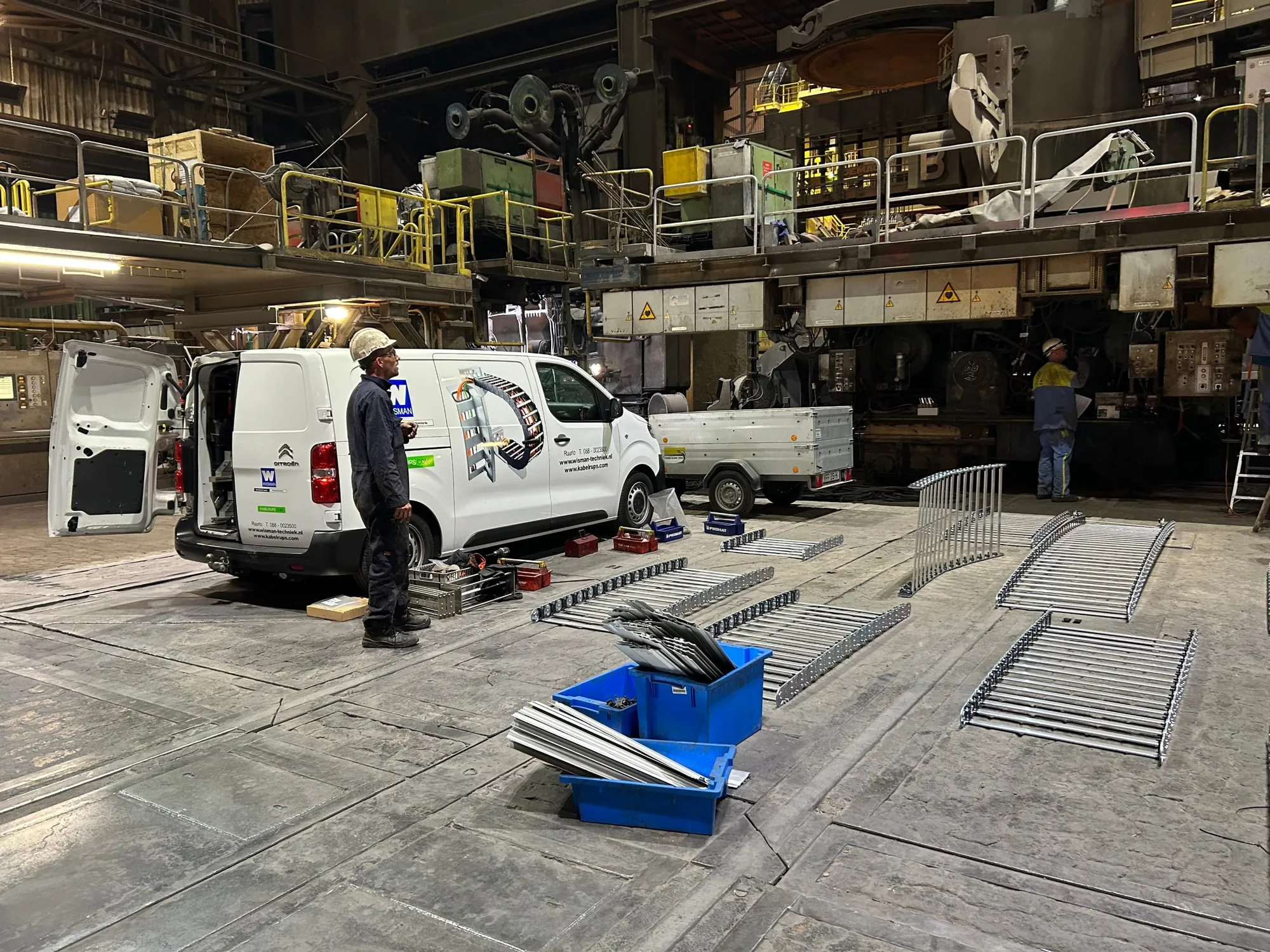
Wisman Techniek inspects and refurbishes cable carriers in production environments. As exclusive dealer of Tsubaki Kabelschlepp in the Netherlands, we have worked with cable carriers since 1975, and we have more than 500 machines with cable carriers under maintenance.
- On-site inspection: we record the condition of every carrier, with photos and advice. That way you know what is needed now and what can wait. Read more about maintenance and inspection.
- Refurbishment at the right time: we preferably schedule repairs during a planned shutdown, so your production is affected as little as possible.
- Prepared in Ruurlo: where needed, we pre-assemble carriers and cables in our workshop, so on-site installation stays short.
- Spare parts: request links, crossbars and other parts directly by part number. Common parts for many series are in stock in Ruurlo.
That way you keep the installations you have running reliably, until the moment investing makes sense again.
Investment can wait for now
Postponing investments is an understandable choice in times like these. But a machine that has to last longer deserves extra attention. If you map the wearing parts now, you prevent a postponed investment from ending in unplanned downtime.
Investment can wait for now. Maintenance can't.