On 6 October, Panasonic Industry launched the GM5 series, a programmable motion controller that drives up to 128 axes from a single unit. It runs two EtherCAT networks at once, each with its own cycle time: for example a fast network at 0.5 ms and a second one at 2 ms.
It shows where machine building is heading: more servo axes in one machine, controlled faster and synchronised more precisely. Where a machine used to have a few axes, builders now control dozens of axes from one controller.
Every axis is also a cable in motion
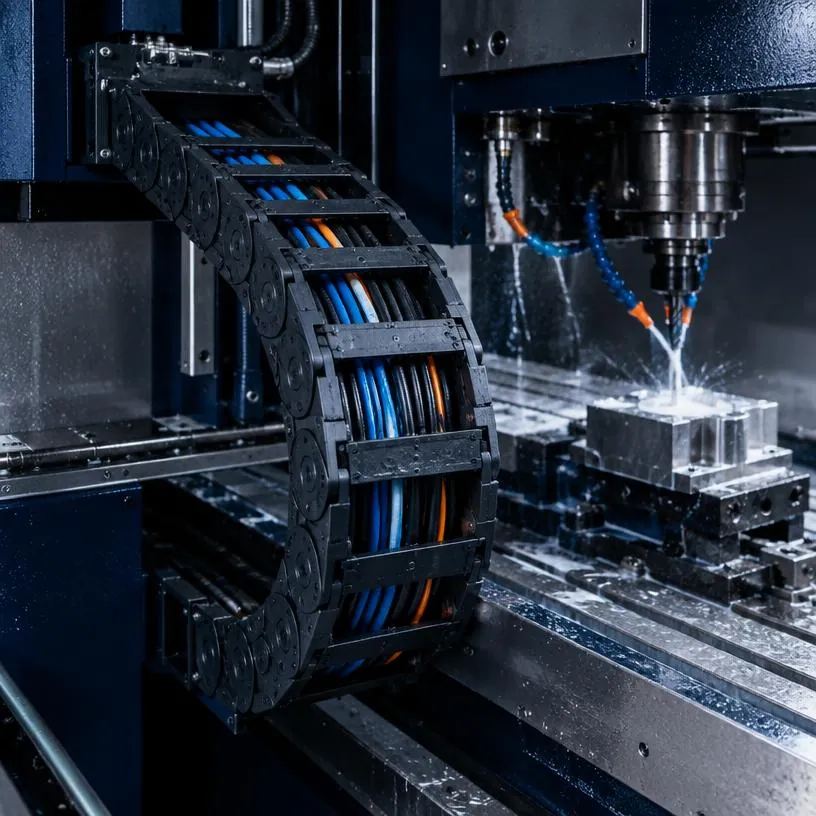
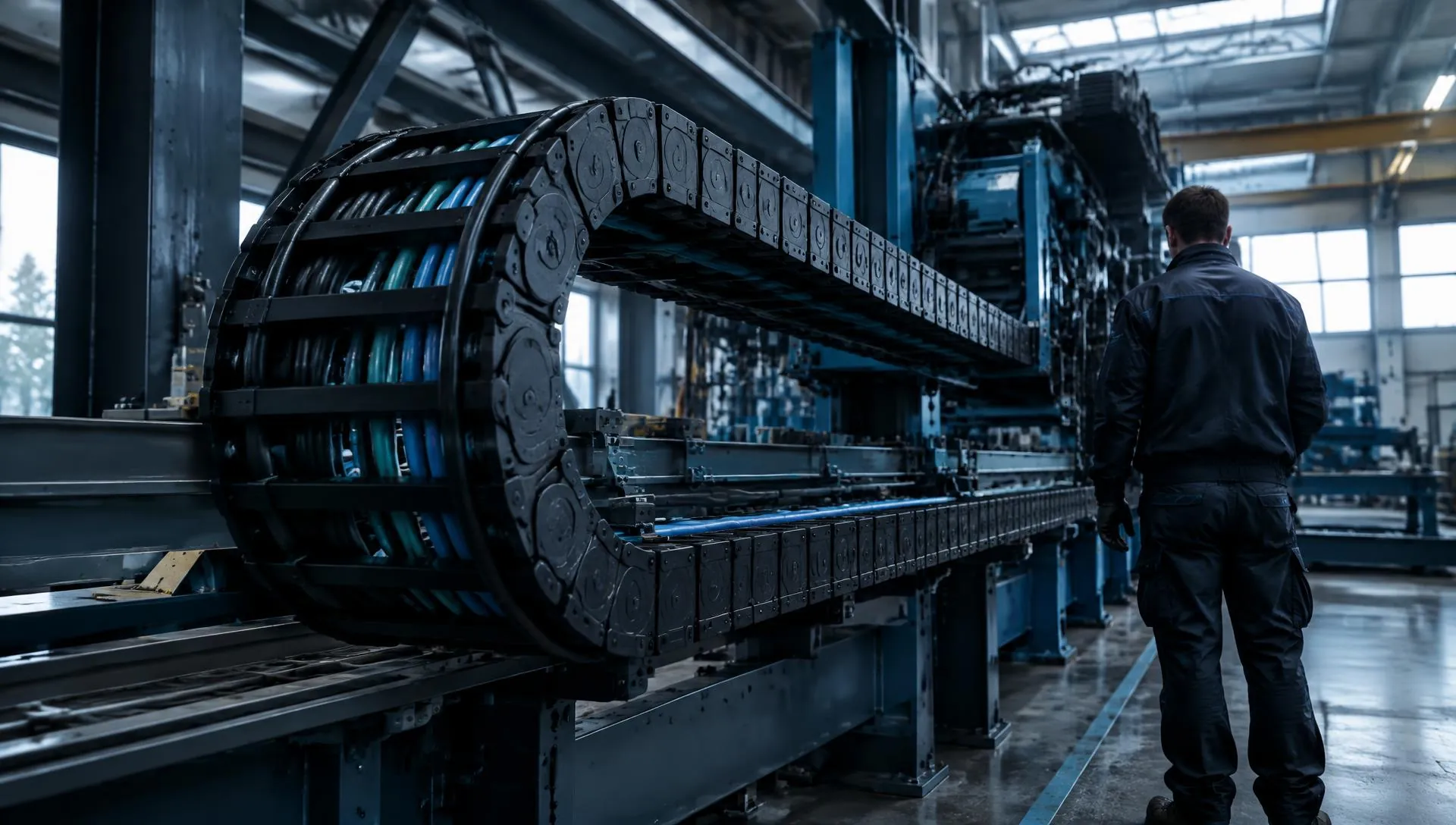
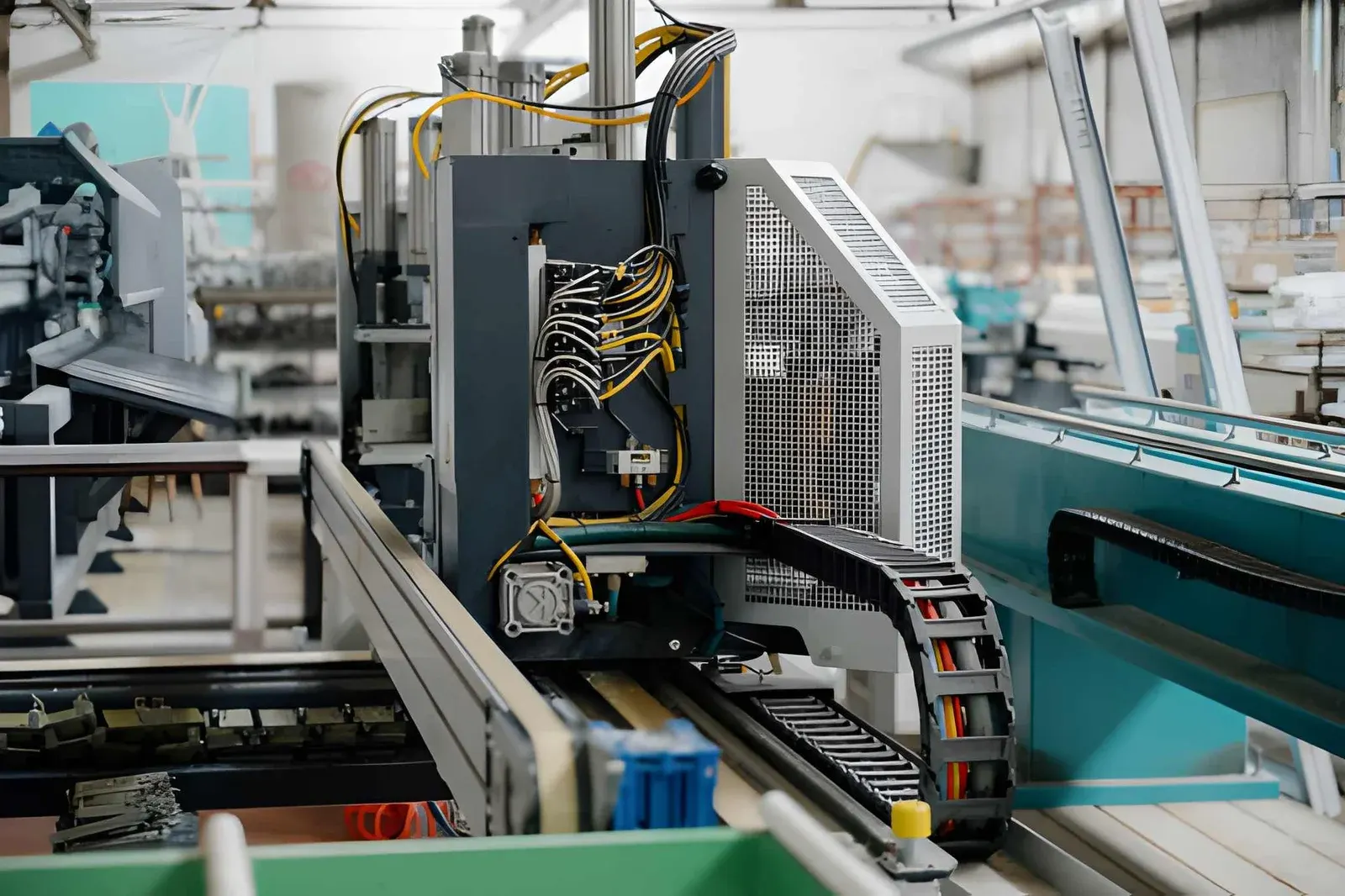
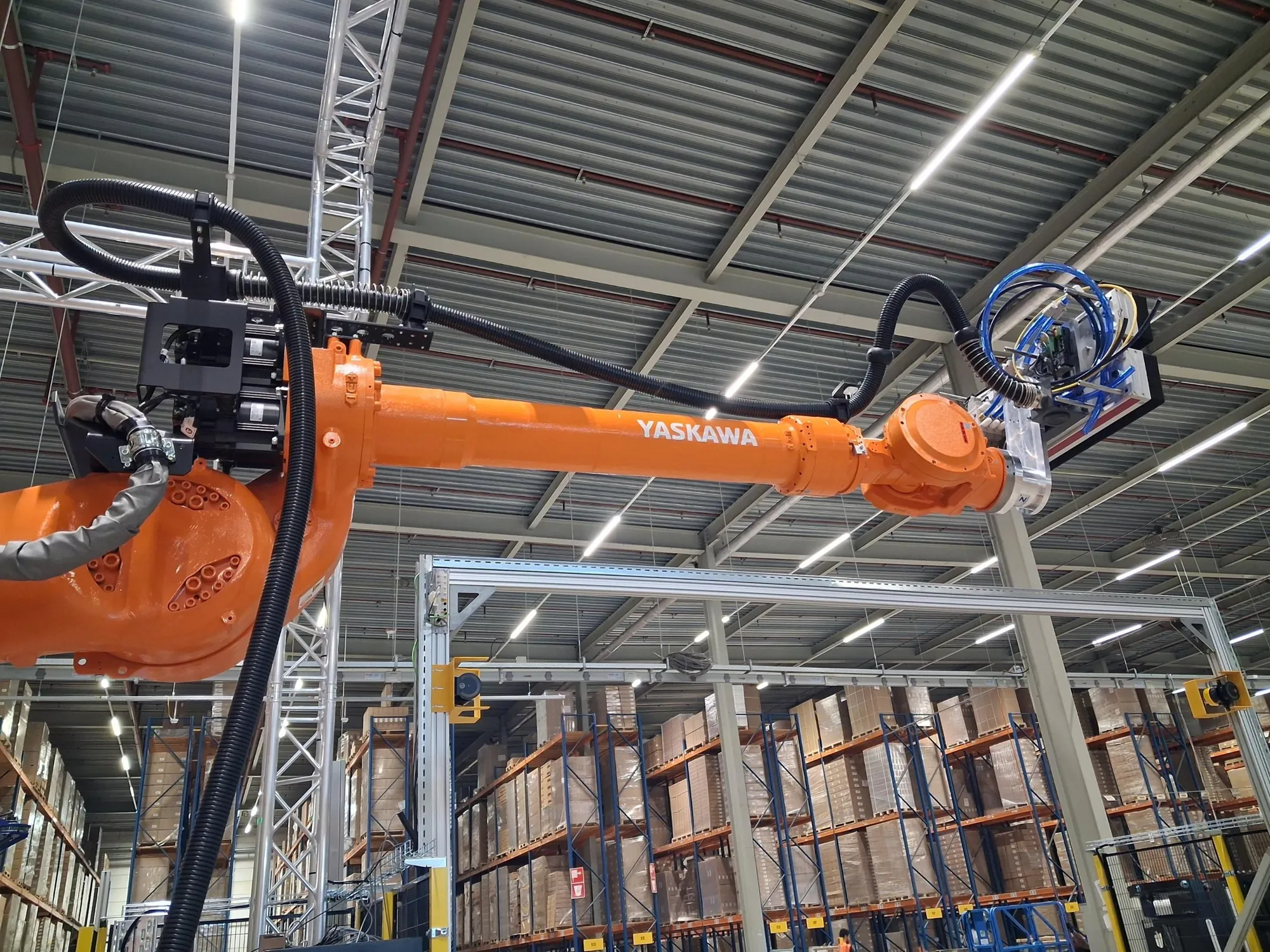
Behind every extra axis there is a motor cable, an encoder cable and often compressed air, vacuum or a sensor cable. These lines move along, sometimes millions of times a year. With short cycle times and many accelerations, cable management quickly becomes the weak spot of the machine.
A single broken wire in an encoder cable already causes a fault. The tricky part is that the controller does not see it coming: the axis works perfectly until the cable gives up. Then a machine that is electronically spot on comes to a standstill.
Where it goes wrong on machines with many axes
- Too many lines in one carrier: the fuller the cable carrier, the more the cables rub against each other and the side walls. A fill level that is too high shortens the life of cable and carrier.
- Cables not made for motion: a standard installation cable is not built to bend millions of times. Cores break, the shield tears and signals become unreliable.
- Bending radius too small: a radius that suits the thinnest cable is too tight for the thickest. Servo and encoder cables in particular are sensitive to this.
- No layout: without separators and shelves, cables crawl over each other and twist in the carrier.
- Signal and power mixed together: without proper separation and shielding, a motor cable can interfere with an encoder or bus cable.
What Wisman Techniek does
Wisman Techniek works with machine builders axis by axis to find the right cable carrier, the right cables and a sound layout. That way a machine with many axes keeps performing mechanically too.
- The right carrier per axis: with cable carriers from Tsubaki Kabelschlepp we choose the series that suits stroke, speed, acceleration and space. From compact plastic carriers to enclosed versions for chips and dirt.
- Cables for continuous motion: TRAXLINE flexible cables are developed for use in cable carriers, including shielded servo, encoder and bus cables.
- A well-planned layout: in ChainLogic we lay out cables and hoses with separators and shelves, and you see the fill level per compartment straight away.
- Checked before you order: a specialist checks radius, length and fill before you receive a quote.
- Delivered assembled: in our workshop in Ruurlo we fit the cables and mount the end brackets, so the carrier is ready to install.
Building a machine with many servo axes, or running into faults in the cable management? Work out your carrier in the cable carrier configurator or get in touch and we will look at it with you, axis by axis.