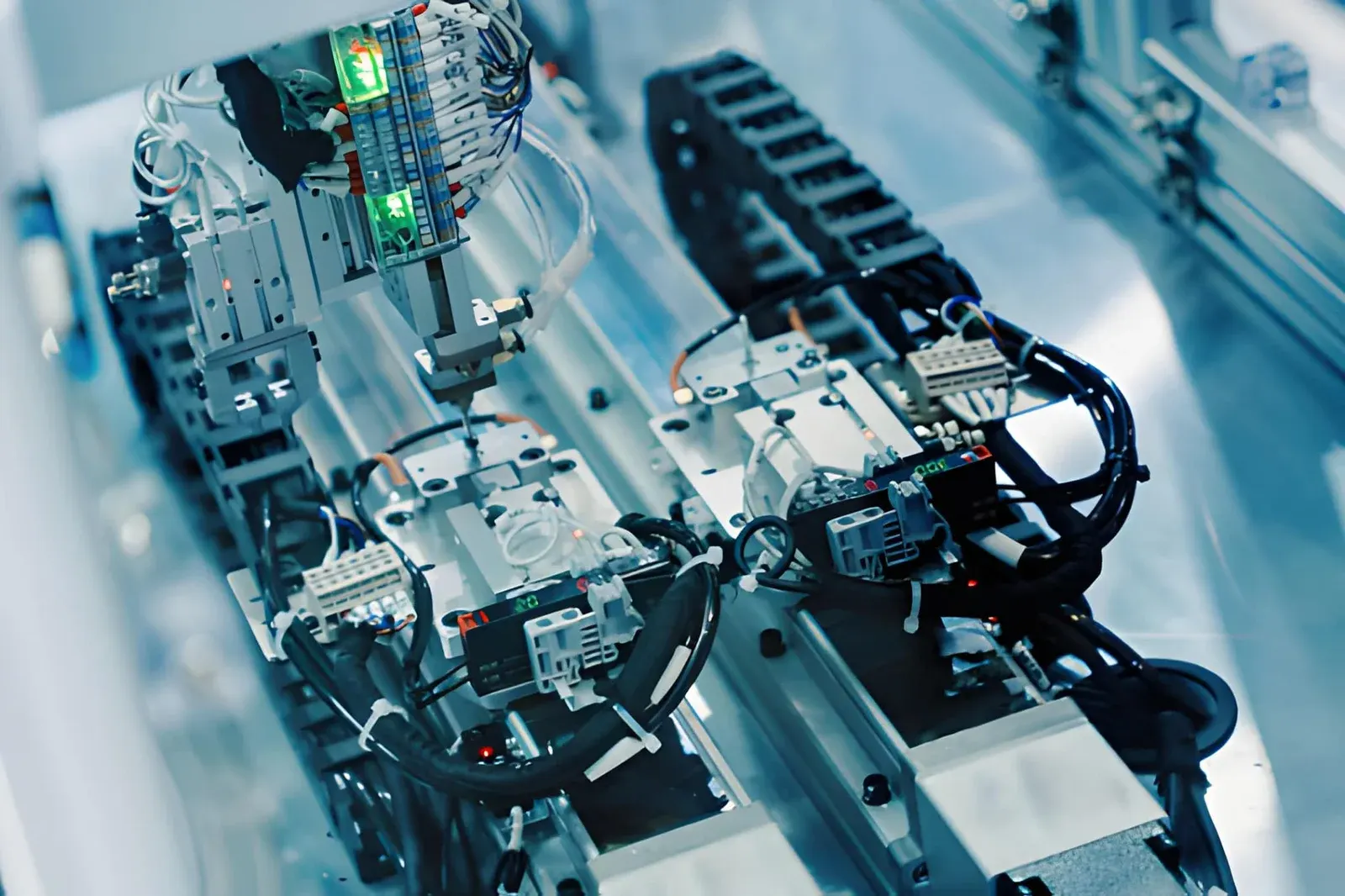
Last week at TechCrunch Disrupt 2026, US start-up Industrial Next presented robot stations that learn new tasks on their own. According to the company, this lets a production line be retooled in minutes instead of weeks, without traditional programming. This was reported by TechCrunch.
What Industrial Next does
According to TechCrunch, the San Francisco company works like this:
- Learning in simulation: the robots practise in a detailed virtual environment that mimics real-world physics. They learn new tasks through simulation and demonstration, not through fixed scripts.
- Modular stations: the stations can be rebuilt, combined and redeployed on another production line.
- Precision work: according to the company, stations are already running in smartphone production, for tasks such as threading a flex cable and clicking a small connector into place.
On stage, Industrial Next announced that it will explore with the BMW Group Technology Office how robots like these can be used in production. This is an evaluation, not yet a rollout.
The software switches fast. Does the hardware?
A robot that learns a new task in minutes is only truly flexible if the rest of the station can keep up. A new task often means different tooling: another gripper, a suction cup, a screwdriving unit or a camera. And with it, the cables and hoses running to that tool change too: compressed air, vacuum, signal, power or data.
If the package of cables and hoses is fixed in place, with cable ties and cables that were cut and reconnected, the software changeover is done while the technician is still at work. Then the time saved is lost after all.
Building cables and hoses in a modular way
If you want to deploy a robot cell flexibly, it pays to build the cabling in a modular way from the start. Three places where this makes the biggest difference:
1. The dress pack along the robot arm
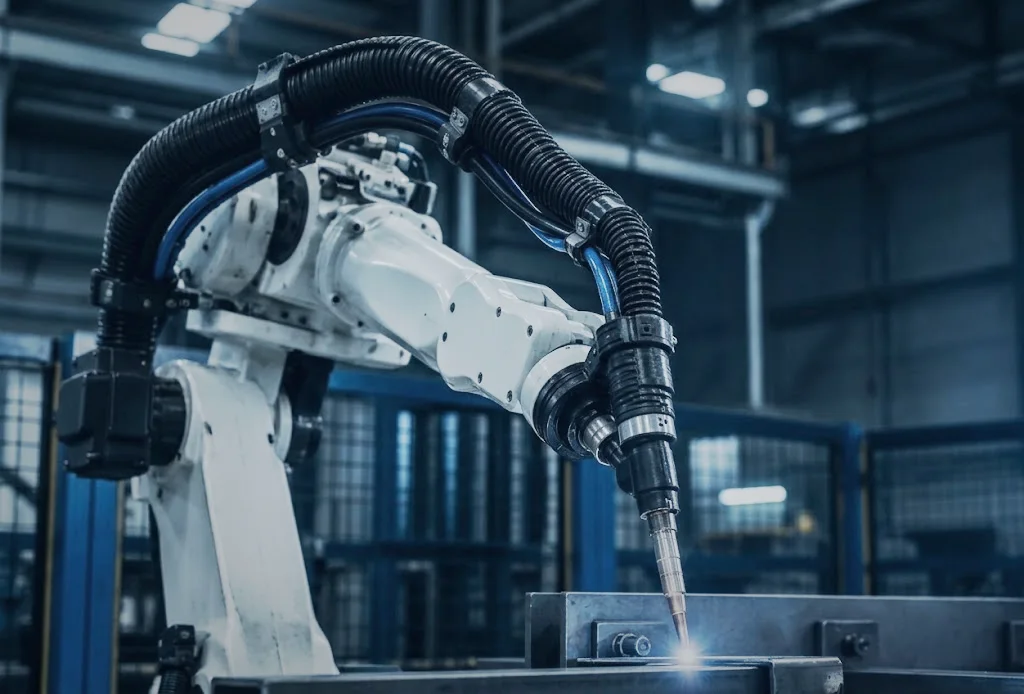
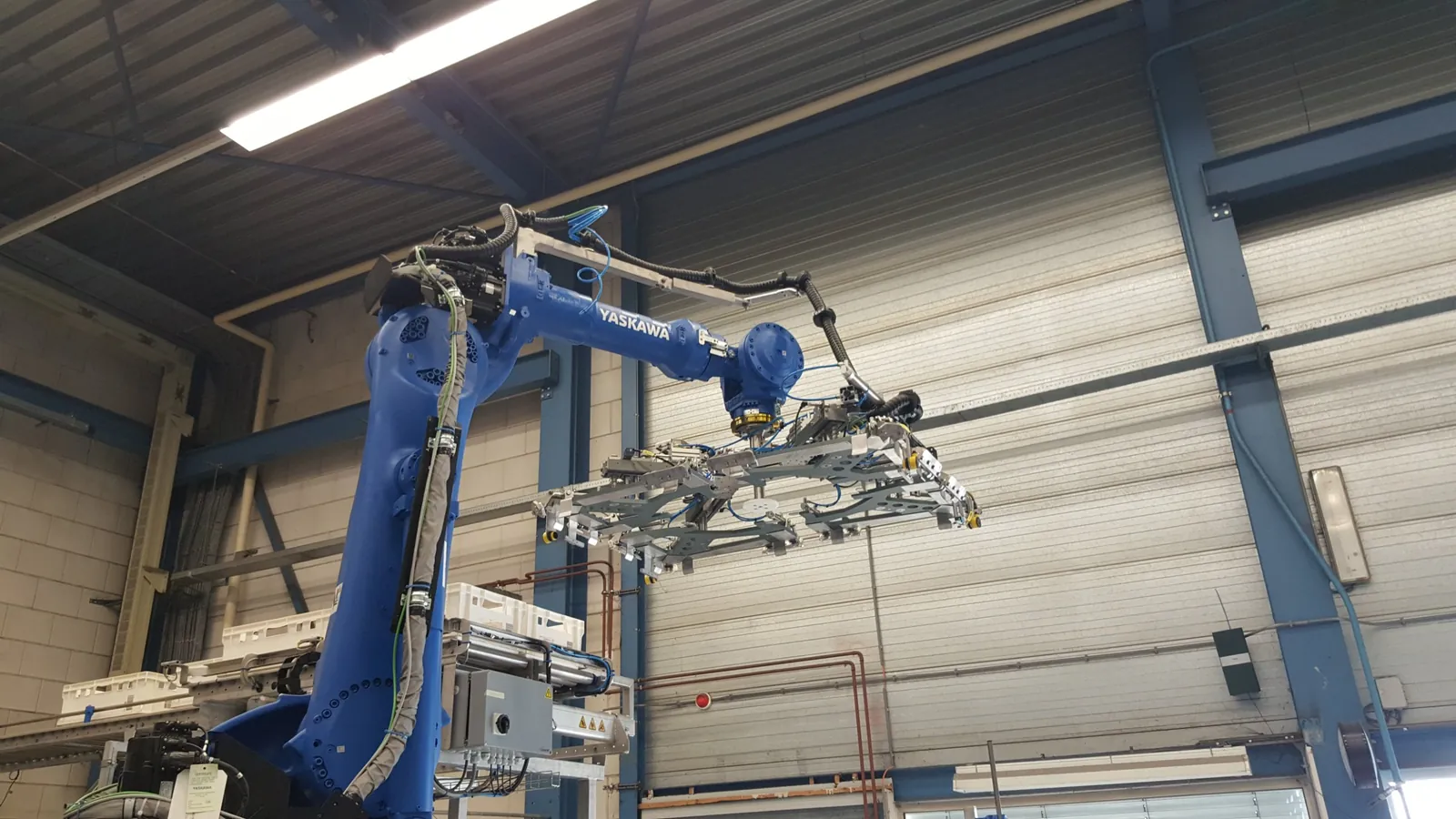
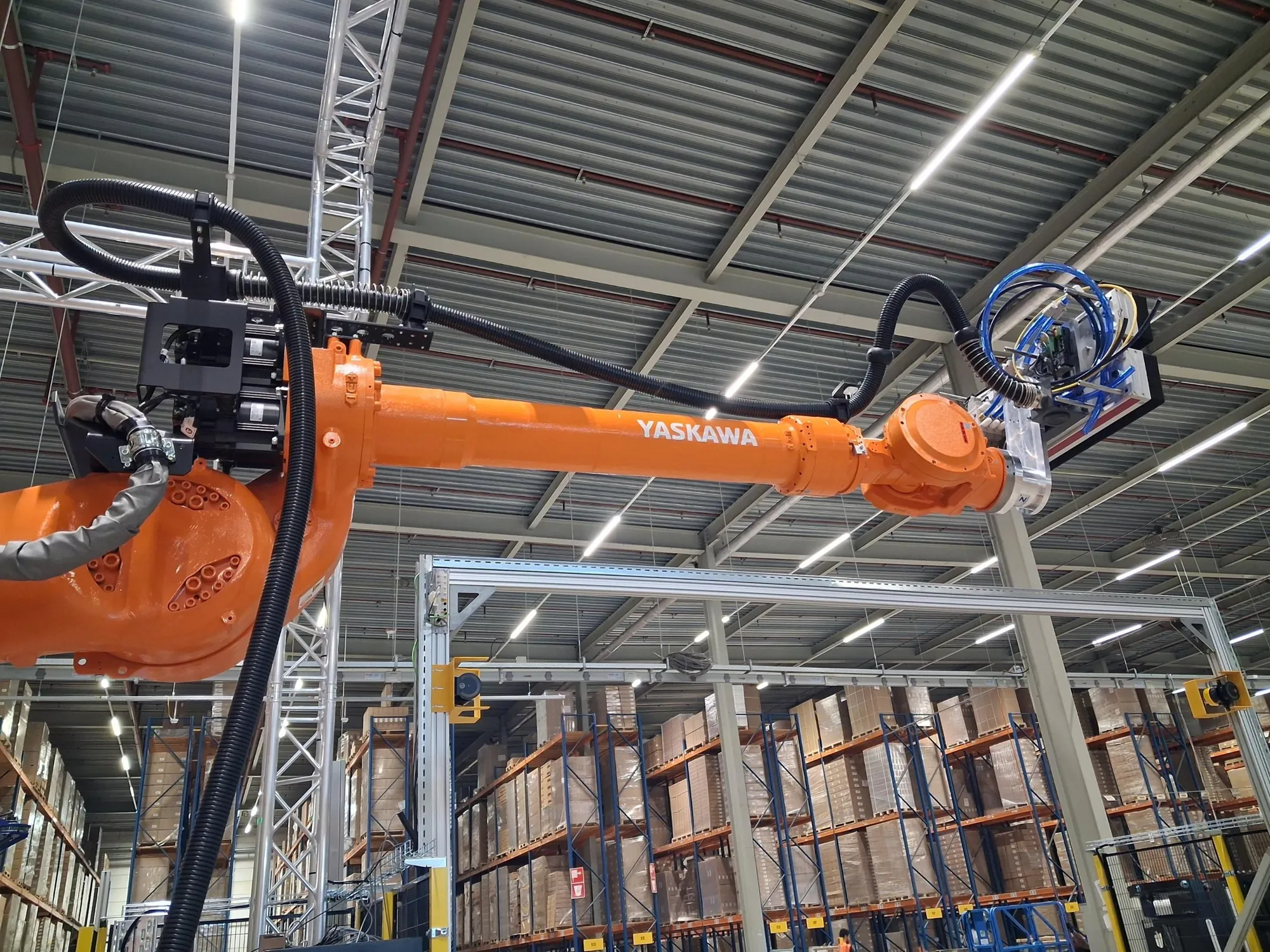
A Reiku dress pack is built from modules: protective hose, rotating flange, clamps, retraction system, ball joint and end fitting are available and replaceable separately. The clamps use interchangeable clamp jaws, so the hose is either held in place or can slide through, depending on how the robot moves. If the tool or the motion pattern changes, you adapt the package instead of rebuilding it.
You can read more about the build-up in What is a dress pack? and Choosing a dress pack for your robot.
2. The entry into the cabinet or machine
Cables for sensors, bus systems and servo motors often come with a pre-assembled connector. Such a cable will not fit through an ordinary cable gland without removing the plug. With a split cable entry system from Icotek, the entry is built around the cable. That way you remove or add a cable without cutting and reconnecting, and the entry stays sealed.
In Choosing a cable entry you can read which solution suits cables with and without connectors.
3. The cable carrier on a linear axis
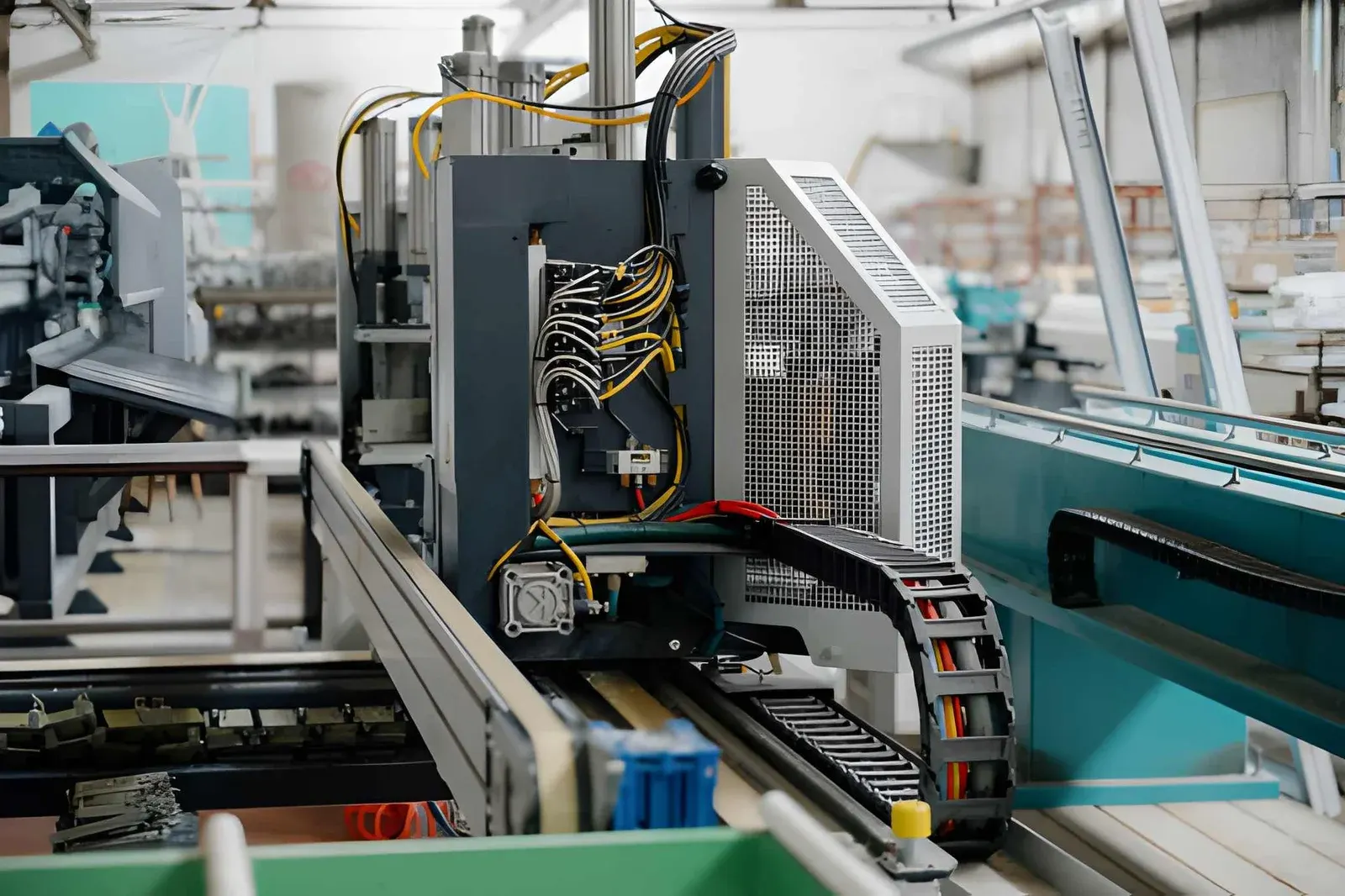
If the robot is mounted on a linear axis or the station moves, the cables run through a cable carrier. On many plastic cable carriers you can open the crossbars, so you can lay cables in or take them out without dismantling the carrier. Do allow room for later: with some spare inner width, an extra cable or hose still fits when a new task comes along. You can read how to determine this in Laying out a cable carrier: fill ratio, fill weight and dividers.
What Wisman Techniek can do
Wisman Techniek supplies the parts for the entire route from robot to cabinet:
- Dress packs: our robotics division supplies Reiku dress packs from engineering to installation, in the Netherlands and Belgium. In the dress pack configurator you can put together a package per axis yourself.
- Cable entries: split systems from Icotek, so cables with connectors enter the cabinet or machine without cutting. See our range of cable entries.
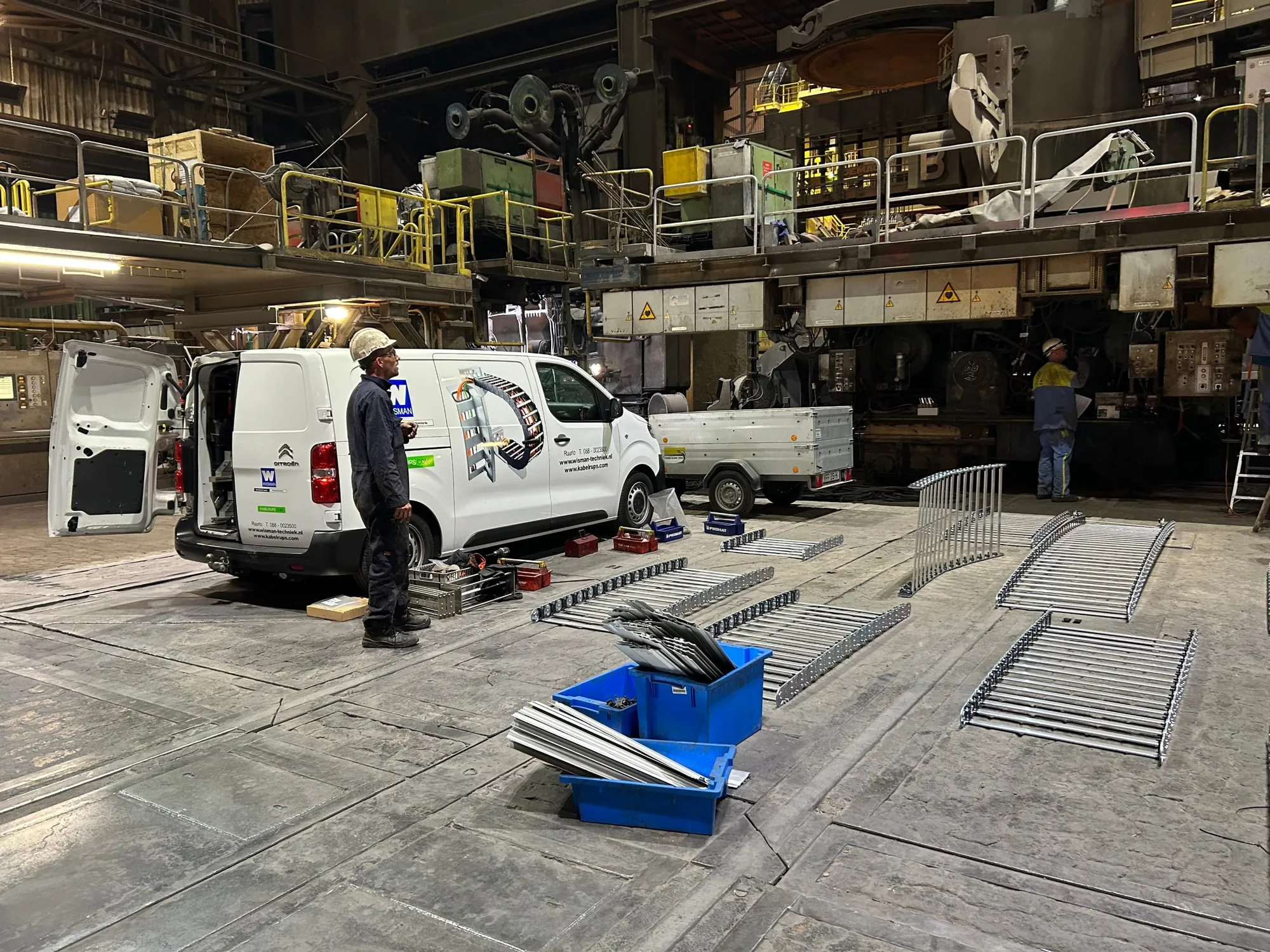
- Cable carriers: for the linear axis or the moving station, calculated and, if you wish, assembled with cables in Ruurlo.
Flexible right up to the connector
Whether robots will really switch tasks in minutes remains to be seen in practice. But the direction is clear: robot cells are rebuilt and moved more often. If you still have to cut cables and rebuild a dress pack, you lose the time the software has gained.
Calculate it yourselfDress pack configuratorConfigure a dress pack for your robotOpen the dress pack configurator