Short answer
Expose a short length of the cable braid and clamp it around its full circumference with an EMC clamp onto an earthed rail, as close as possible to where the cable enters the cabinet. Do not use a thin wire (pigtail) to earth, keep the unshielded section as short as possible and secure the cable immediately for strain relief.
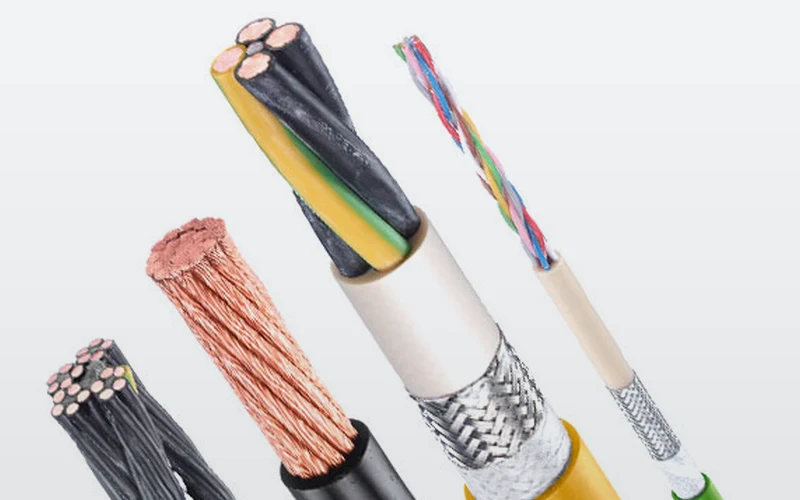
A shielded cable is only shielded if the shield is properly earthed. The braid around the cores picks up interference and drains it away, but only if there is a low-impedance connection to earth. If that connection is missing, or runs through a thin wire, the shield only works halfway. Sometimes it even makes things worse.
In practice, this is where things often go wrong. The right cable is installed in the machine, but in the cabinet the braid is left hanging loose, twisted into a strand on a terminal or cut off completely. The result: faltering encoders, error messages from the frequency inverter and faults that only occur when the motor is running. This article explains how to connect a shielded cable correctly and which components to use.
Why must the shield be earthed?
A frequency inverter drives the motor with rapidly switching voltage. This creates high-frequency currents and fields around the motor cable. A shielded cable keeps this interference within the braid and returns it via earth to the source. Conversely, the braid of an encoder or bus cable protects the signal against external interference.
The same applies to both: the interference needs somewhere to go. That only works through a connection with low resistance and low self-inductance. High-frequency current flows mainly along the surface of a conductor. A wide, short connection around the full circumference of the braid therefore works much better than a thin wire.
Which cables in a machine need to be shielded is explained in shielded cable in the cable carrier.
360-degree contact: what does it mean?
By 360-degree contact we mean that the braid is pressed against a conductive surface around its entire circumference. Not a point, not a wire, but a ring of contact. This way the shield effectively continues right through to the cabinet earth.
You do this with an EMC clamp (also called a shield clamp or screen clamp). The clamp presses the exposed braid against a rail or plate connected to the cabinet earth. Most clamps also secure the cable mechanically, providing strain relief at the same time.
An overview of clamps for earth bar, DIN rail, C-rail and I/O modules can be found under EMC clamps.
Why a pigtail is not a good idea
A pigtail is the braid twisted into a strand and connected to earth with a cable lug or terminal. It looks like a tidy solution, but for high-frequency interference it is a narrow, long path with high self-inductance. The higher the frequency, the worse that path works.
As a result, the interference is not drained properly. The shield itself then starts radiating or picking up interference, especially on motor cables connected to an inverter. So do not use a pigtail, not even "for now". If there is no room for a clamp, that is a reason to change the cabinet layout.
Step by step: connecting a shielded cable
- (01)Determine the clamp position. As close as possible to where the cable enters the cabinet, and with an inverter as close as possible to the terminal. That way the interference does not travel through the cabinet first.
- (02)Remove the outer sheath over a short length, exactly at the clamp position. Do not damage the braid.
- (03)Leave the braid intact. Do not fold it back over the sheath unless the clamp manufacturer specifies this, do not comb it out and do not twist it.
- (04)Choose the clamping range based on the diameter of the exposed braid, not the outer sheath. A clamp that is too large does not press properly; a clamp that is too small damages the braid.
- (05)Clamp the braid onto the earthed rail or plate. Make sure the rail itself is connected well and by a short path to the cabinet earth, on a bare, unpainted contact surface.
- (06)Secure the cable with the clamp's cable ties or with separate strain relief, so that there is no tension on the braid and the cores.
- (07)Keep the unshielded section short. Between the clamp and the terminal, the cores run without braid. The shorter that section, the better.
More about securing cables can be found in what is strain relief.
Earth at one end or both ends?
For motor cables connected to a frequency inverter, it is common practice to earth the shield at both ends: at the inverter and at the motor. This provides a short return path for the high-frequency current. For some analogue measurement signals, however, the manufacturer specifies earthing at one end only, to prevent earth loops.
So there is no rule that always applies. Follow the installation instructions of the inverter, the motor and the encoder or measuring instrument. They always take precedence.
EMC clamp on the rail or in the entry?
There are two ways to connect the shield:
- On a rail in the cabinet. The cable enters the cabinet through a gland, frame or entry plate and is then clamped onto an earth bar, DIN rail or C-rail. This is the most common solution and easy to expand.
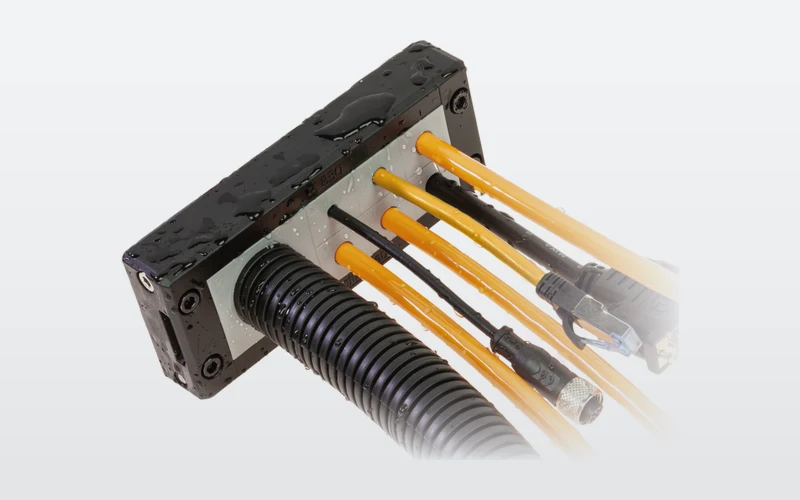
- In the cable entry itself. There are EMC glands and EMC grommets that earth the braid right at the cabinet wall. This saves space in the cabinet and the interference never even enters it.
Wisman supplies both. From Detas Ultra these include the MSB and MSD clamps for earth bar and DIN rail and the MSY and MSK for Siemens ET200 modules. From Icotek, among others, the SKL clamps and EMC versions of the glands and grommets. Which entry fits the cabinet wall is explained in cables into the cabinet. In the Cable Entry Planner you list your cables and tick which ones are shielded.
Calculate it yourselfCable entry plannerFrom cable list to cable entry with article numbersOpen the plannerShielded cables in the cable carrier
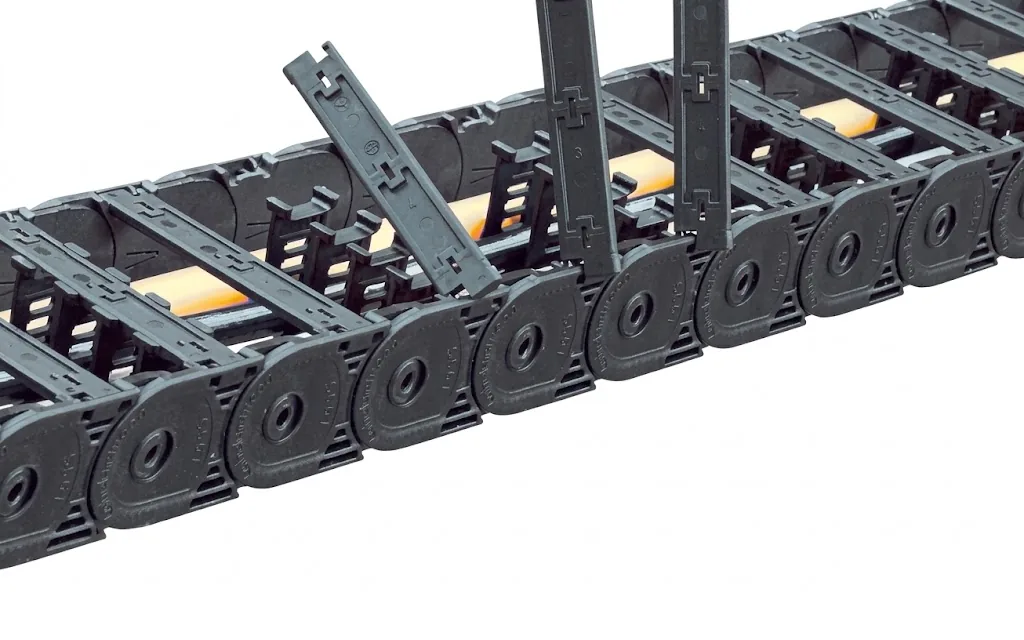
If the cable runs through a cable carrier, the shield has an especially tough time. The braid flexes with every stroke. A standard shielded cable is not designed for this: over time the braid breaks and the shielding is lost, often before the cable itself has failed.
In a cable carrier, therefore, use a shielded cable designed for motion, such as the shielded TRAXLINE series. In the Kabelfinder you can filter directly by shielding. Secure the cable at both ends of the carrier, outside the bend, and only clamp it on the braid in the cabinet.

Common mistakes
- Connecting the braid as a pigtail to an earth terminal
- Cutting off the braid because it "gets in the way"
- Choosing the clamp based on the outer sheath instead of the braid
- Mounting an earth bar on a painted surface, without bare contact
- A long section of unshielded cores between clamp and terminal
- Using a standard shielded cable in a cable carrier
Help with your selection
Not sure which clamp or entry suits your cables? Send us the cable list with the diameters and which cables are shielded. A specialist selects the clamps and the entry and checks that everything fits in the cabinet. Request advice or view all cable entries.
Frequently asked questions
What is an EMC clamp?
A clamp that presses the exposed braid of a shielded cable around its full circumference against an earthed rail or plate. This gives the shield a low-impedance connection to earth. Most EMC clamps also provide strain relief.
Why is a pigtail bad for EMC?
A twisted strand of braid is a narrow, long connection with high self-inductance. High-frequency interference drains poorly through it, so the shield works much less effectively.
Where do I place the EMC clamp?
As close as possible to where the cable enters the cabinet, or with a frequency inverter as close as possible to the terminal. Keep the section of cores without braid between clamp and terminal short.
Do I earth the shield at one end or both?
For motor cables connected to a frequency inverter, usually at both ends. For some analogue measurement signals, the manufacturer specifies one end. Always follow the instructions of the inverter, motor and instrument.
Which diameter do I choose the clamp for?
The diameter of the exposed braid, not the outer sheath of the cable. The clamping range per model is listed in the variant table.
Can the shield also be earthed in the cable entry?
Yes. There are EMC glands and EMC grommets that earth the braid right at the cabinet wall. This saves space in the cabinet.
Next step
Calculate it yourself or browse the range. We check your result free of charge.

Series on this topic
Question about this topic?
Ask Olaf directly
Inside Sales at Wisman Techniek