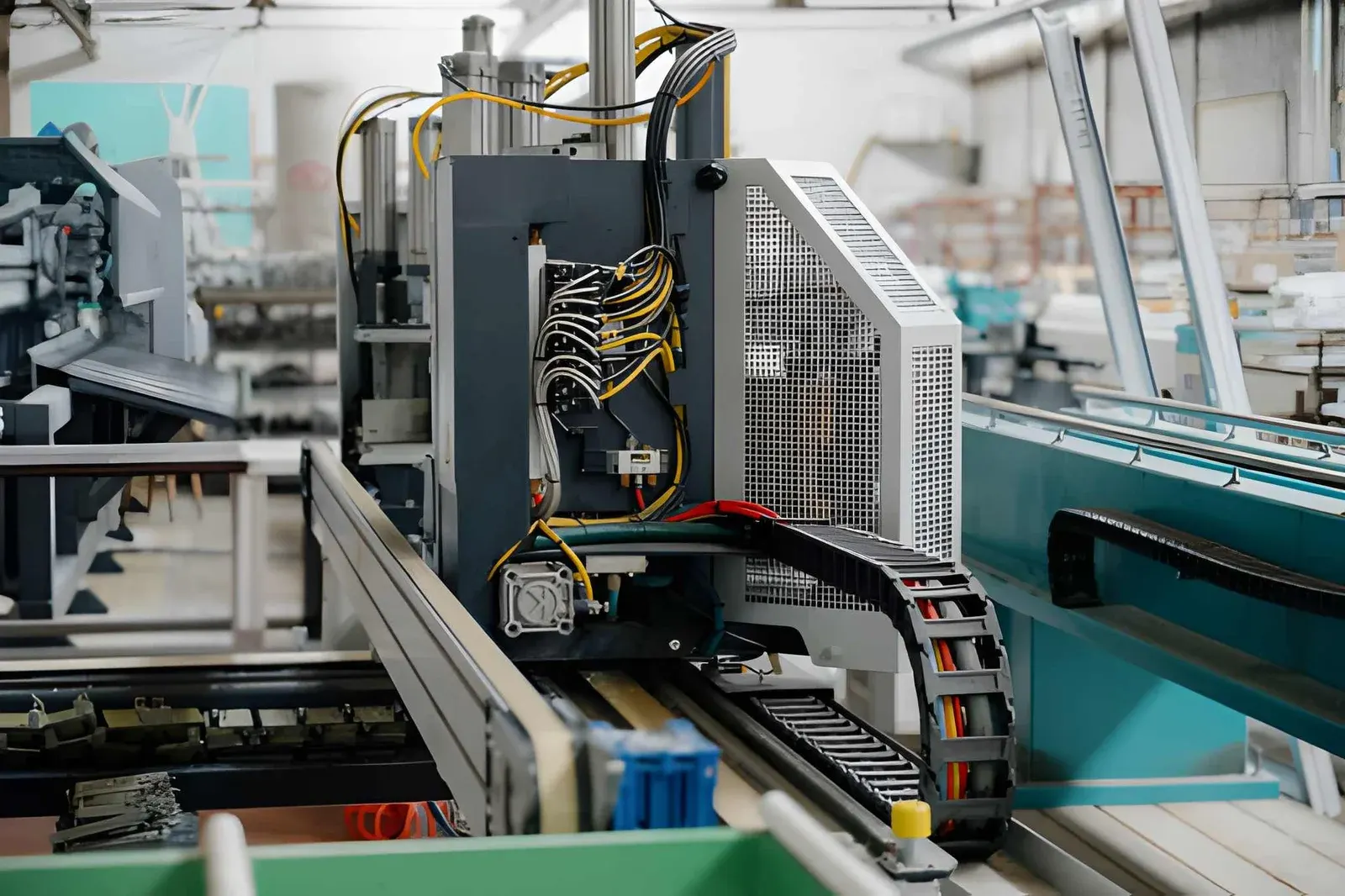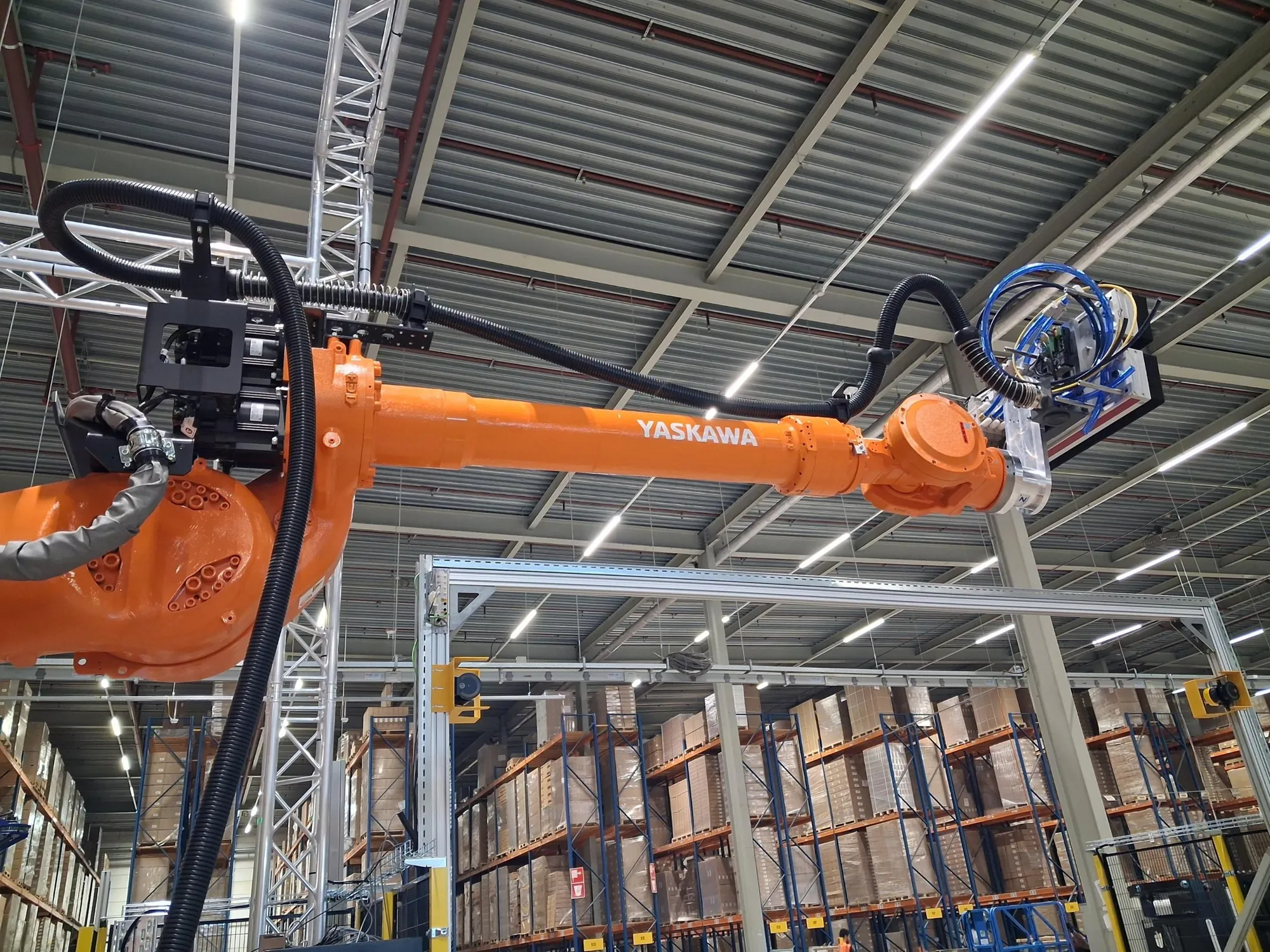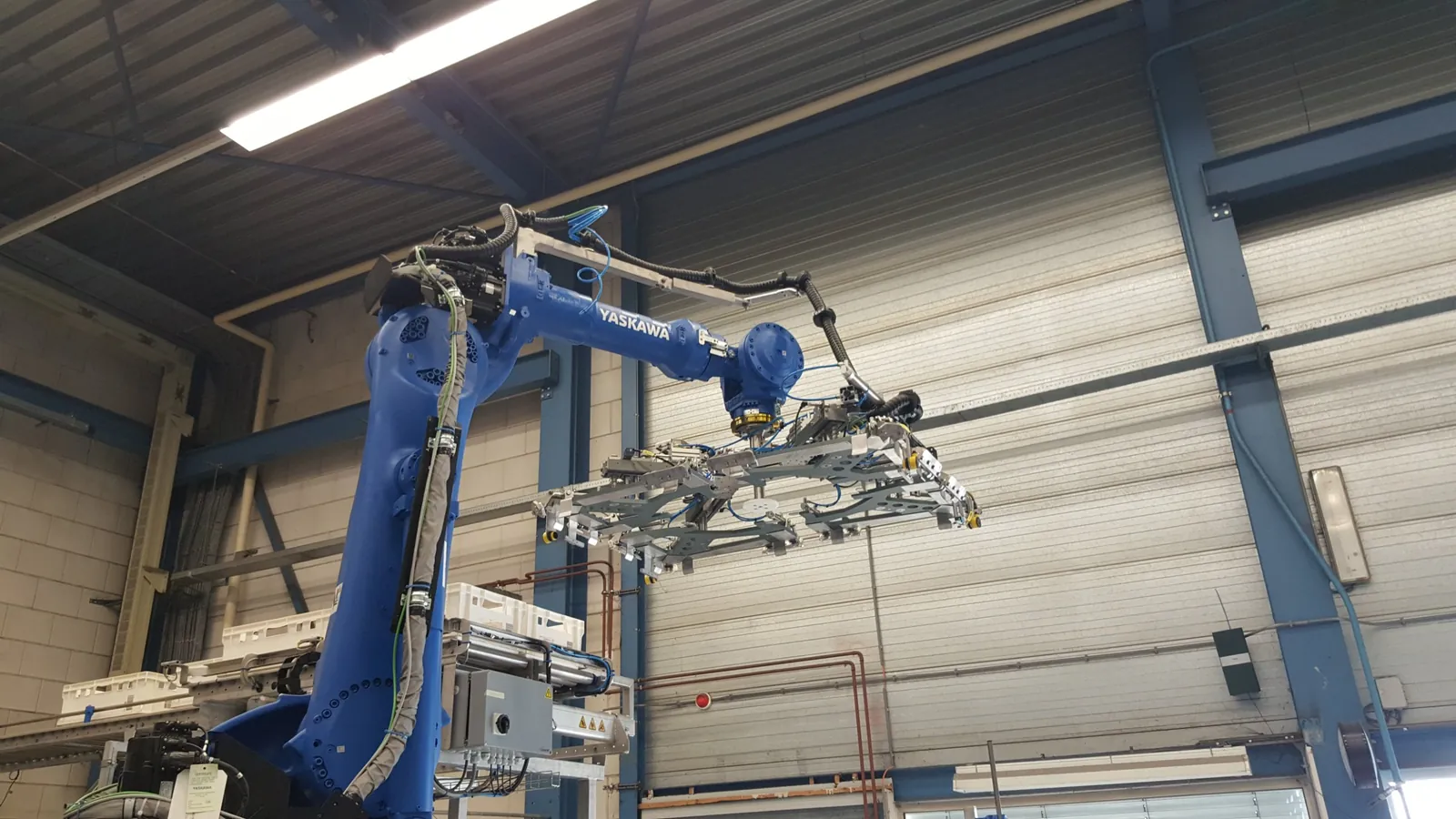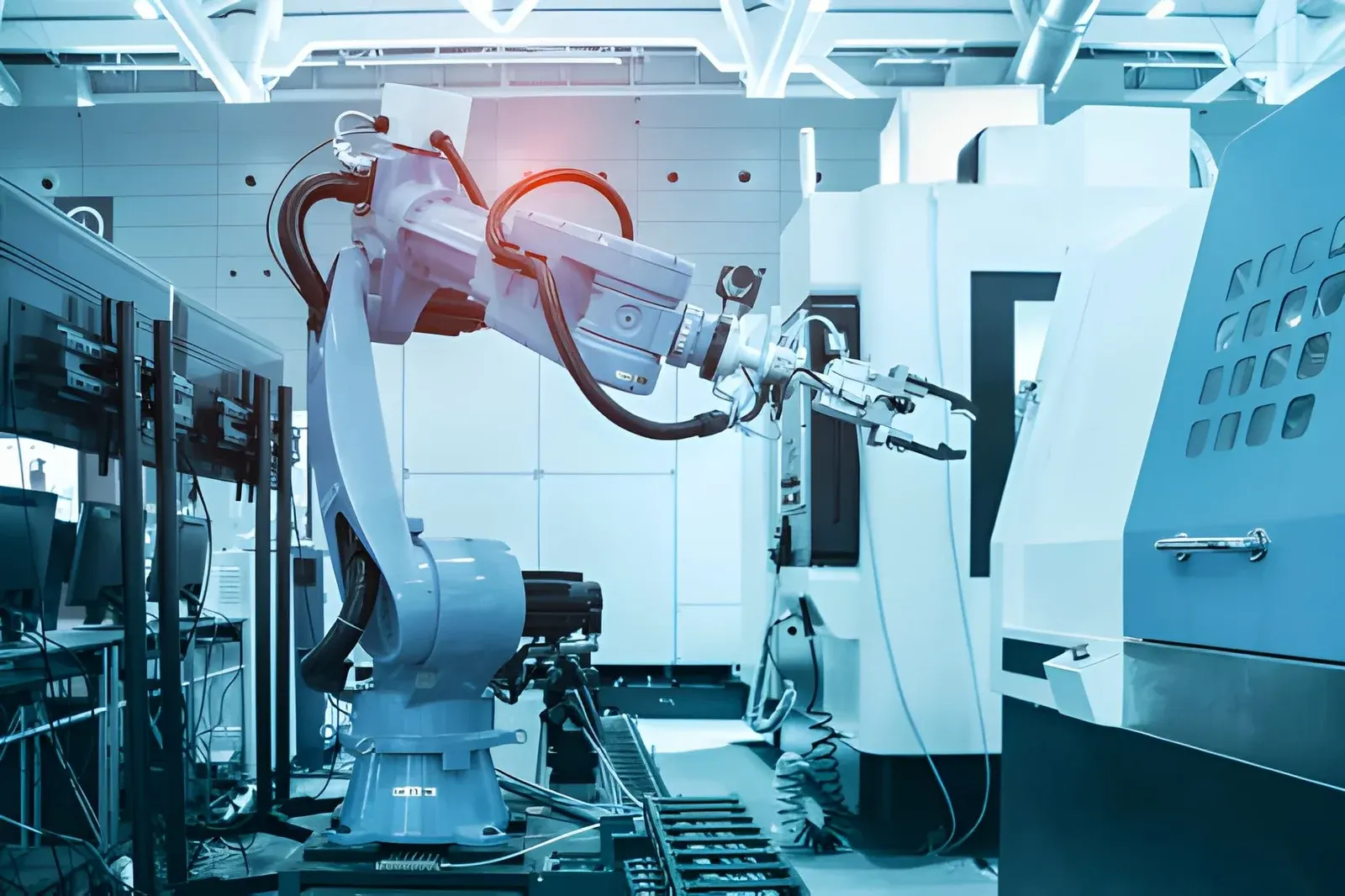
More and more robots are no longer fixed to the floor but travel along a linear axis. This considerably increases the working range, as FANUC showed this week with a welding cobot on a rail.
Two systems, one transition
For the cabling, this means you have two systems that must connect properly. A cable carrier along the rail absorbs the linear movement, and a dress pack on the arm absorbs the rotations. If that transition is not designed properly, kinks and wear develop there.
How we design the transition
- (01)Travel length and speed: these determine the type of cable carrier, the length and whether it can be self-supporting or must glide.
- (02)One cable package: we define the package once, so the cables and hoses in the carrier and on the arm are the same.
- (03)The transition point: close to the base of the robot, with sufficient slack for the rotation of axis 1.
- (04)Mounting: strain relief on both sides, so the movement of one system does not pull on the other.
Both worlds under one roof
Wisman Techniek combines both worlds: cable carriers from Tsubaki Kabelschlepp and dress packs from Reiku, with in-house engineering and assembly.
That saves a round of coordination between two suppliers, and you have one point of contact for the entire process, from rail to torch.
Calculate it yourselfCable carrier configuratorCalculate, select and assemble a cable carrierOpen the cable carrier configurator Calculate it yourselfDress pack configuratorConfigure a dress pack for your robotOpen the dress pack configurator