Self-supporting or gliding?The travel length decides.
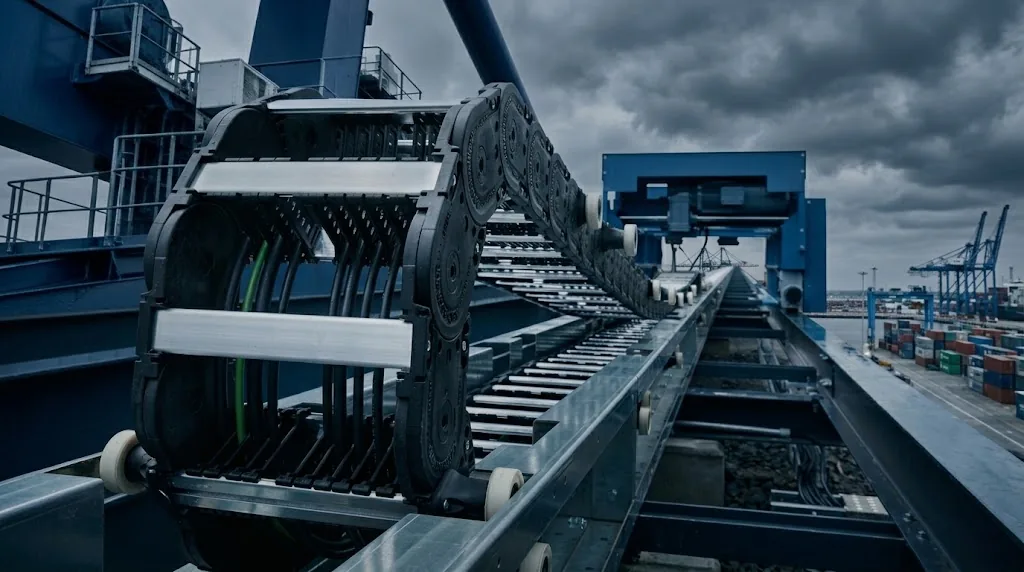
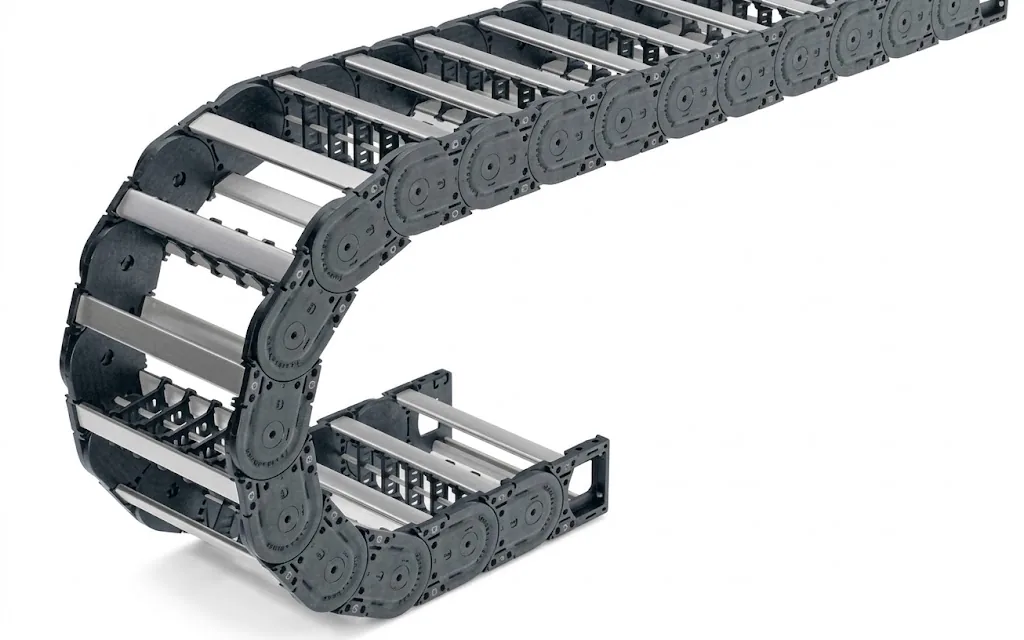
With a short travel length the carrier supports itself: the upper part hangs freely above the lower. As the travel length gets longer, the upper part rests on the lower and glides, usually in a guide channel.
The difference in one table
| Criterion | Short strokes, no channel neededSelf-supporting | Long travel lengths, in a guide channelGliding |
|---|---|---|
| Travel length | Short to medium, limited per type | Long, up to many tens of metres |
| Guidance | No channel needed | Guide channel needed |
| Speed | High speeds and accelerations possible | Lower speeds due to gliding |
| Wear | Little contact, little wear | Gliding surfaces wear; channel and gliding shoes determine a lot |
| Installation | Simple | The channel must be straight and well aligned |
Choose self-supporting for
- Short strokes
- High speed or acceleration
- No room for a channel
Choose gliding for
- Long travel lengths
- Gantry cranes and halls
- Intralogistics and storage systems
Conclusion
Self-supporting where possible, gliding where necessary. The maximum self-supporting length differs per type and depends on the cable weight; the configurator calculates this for you.
Start the cable carrier configuratorRange
Series to start with
Frequently asked questions
Self-supporting or gliding: frequently asked questions
Compare
Other choices
Self-supporting or gliding
Still not sure?
We calculate both.
Send the travel length, speed and cable package. A specialist advises within 1 working day.
Call a specialist




- Phone+31 88 002 3500
- E-mailverkoop@wisman-techniek.nl
- AvailableMon–Fri 08:30–17:00
11 specialists in Ruurlo
You speak directly to someone who knows.